Production Solutions for Modern Stator Manufacturing
The stator is the heart of an electric motor and is crucial to the performance, efficiency, and reliability of electric drive systems. Its manufacture requires high-precision winding processes, intelligent automation, and maximum process stability.
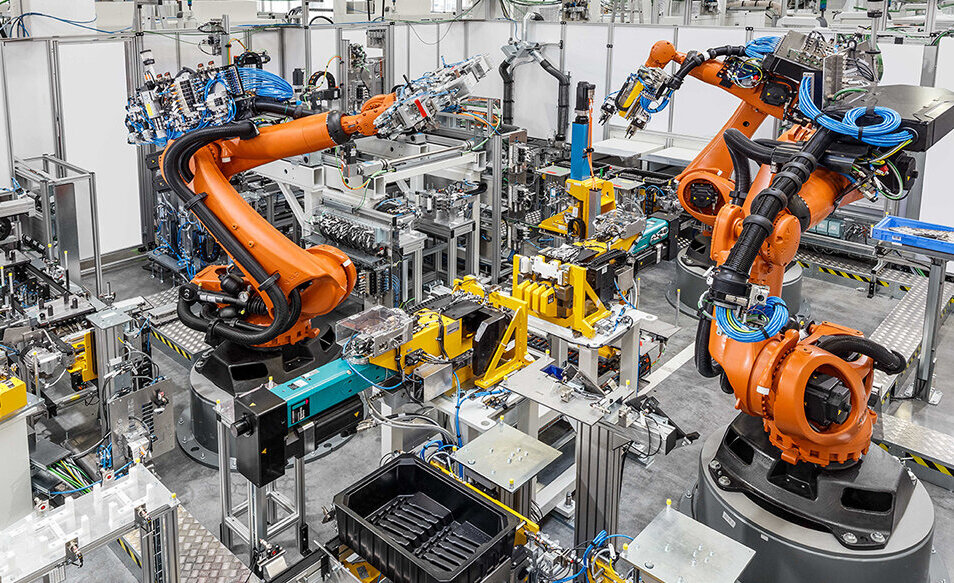
GROB develops and implements production systems for industrial stator manufacturing—from the development of new manufacturing concepts through prototyping to fully automated series production. The modular system concepts support various winding technologies and can be flexibly adapted to the product, production volume, and application.
-
Comprehensive winding expertise
One-stop production solutions for hairpin, continuous hairpin, and feed-through technologies, as well as stator impregnation
-
High level of process expertise
In-house development and validation of all manufacturing processes to ensure maximum quality and process reliability
-
Turnkey systems
Engineering, automation, and plant construction—all from a single source—from prototype manufacturing to mass production
-
In-house application centers
Development, optimization, and validation of new manufacturing processes under conditions close to those of mass production
From Process Development to Turnkey Production Lines
The cost-effective manufacture of modern stators requires far more than just individual production machines. GROB supports companies throughout the entire development and industrialization process—from the initial feasibility analysis to the turnkey production line.
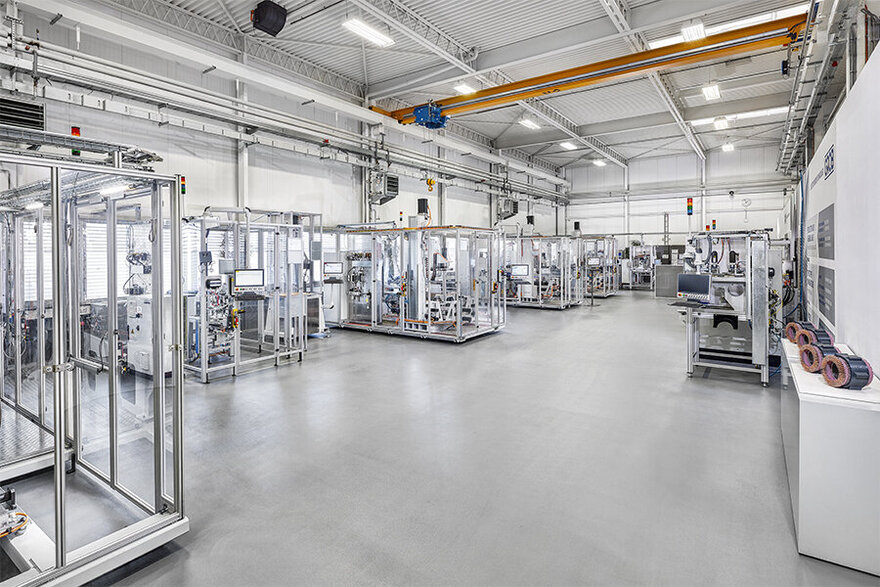
Through its own technical application centers, manufacturing processes can be developed, validated, and continuously optimized under conditions that closely resemble those of series production. This results in customized production solutions for various stator designs and production volumes.
- concurrent engineering
- Feasibility Studies
- Development of New Manufacturing Concepts
- Prototype and small-batch production
- Process development and validation
- Turnkey Systems
- Plant construction and commissioning
- Production optimization
Production Solutions for Various Winding Technologies
Depending on the motor design, different winding methods are used. GROB develops production systems for all common stator manufacturing technologies and combines many years of process expertise with modular system designs.
The portfolio includes hairpin technology, continuous hairpin technology, feed-in technology, the manufacture of axial flux motors, flyer-winding and needle-winding technology, as well as solutions for stator impregnation.
Stator Manufacturing Using Hairpin Technology
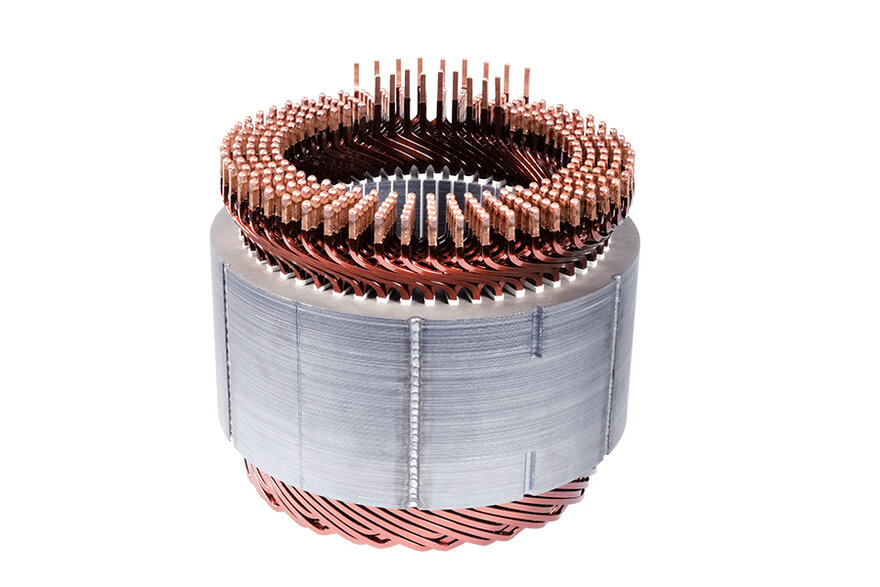
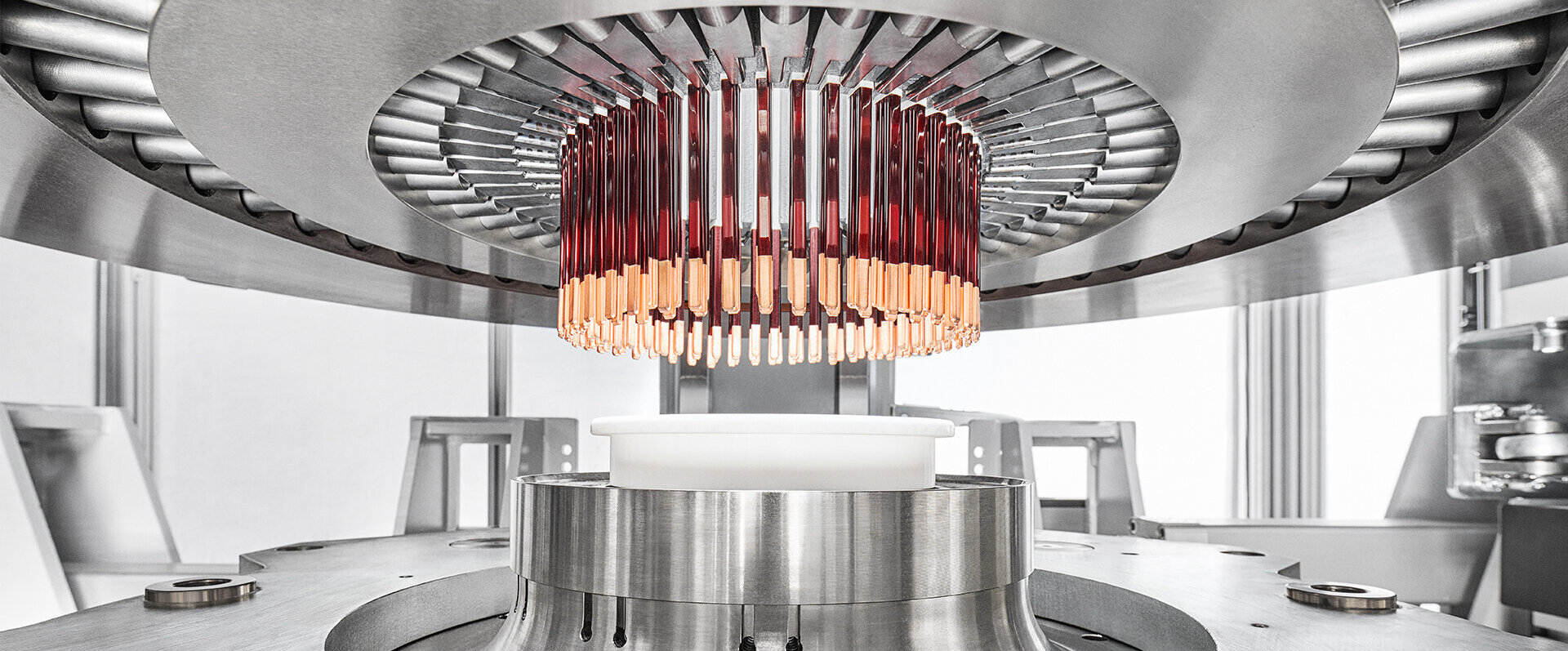
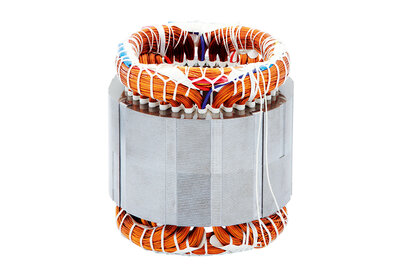
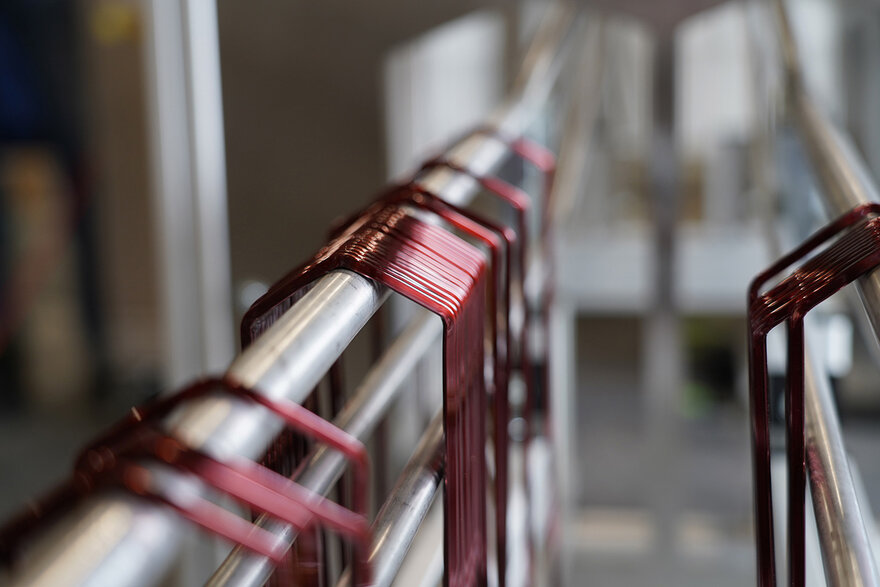
Hairpin technology is now one of the leading manufacturing processes for high-performance electric motors. In this process, flat copper wires are bent into U-shaped hairpins, inserted into the laminated stator core, and then interconnected according to the winding pattern.
Thanks to the high copper fill rate, this process enables the production of particularly powerful and energy-efficient electric motors. GROB develops highly automated production lines that combine all process steps—from hairpin manufacturing and insertion to contacting and final inspection—into a single, integrated manufacturing solution.
With hairpin production systems installed worldwide, GROB has extensive experience in industrial stator manufacturing.
Stator Manufacturing Using Continuous Hairpin Technology
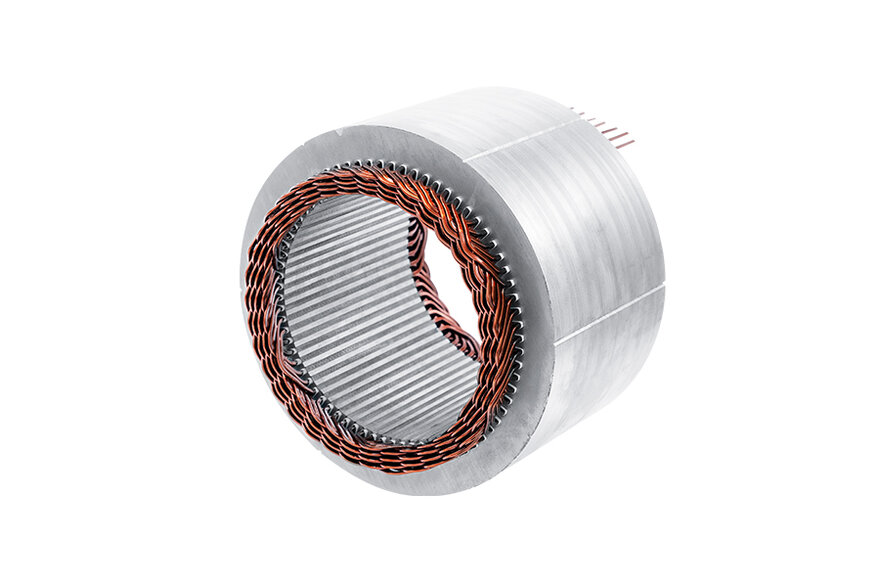
Continuous-hairpin technology is based on processing continuous flat copper wires into winding mats. The windings are then inserted radially into the laminated stator core and interconnected.
The reduced number of free wire ends significantly reduces the effort required for interconnection. At the same time, the process enables particularly gentle wire handling and high process stability.
GROB’s modular production systems can be flexibly adapted to different winding schemes and motor architectures.
Additional GROB Technologies for Stator Manufacturing
Insertion technology is a well-established manufacturing process for closed stators with round-wire windings. Depending on the product requirements, flyer or stencil winding methods are used to precisely insert the windings into the laminated stator core.
Thanks to its modular design, this technology is suitable for a wide variety of industries and motor designs—from industrial drives to electrical auxiliary units.
Advantages:
- Patented anti-twist solution
- Modular and scalable system design
- Technology applicable across industries
- Proven system technology
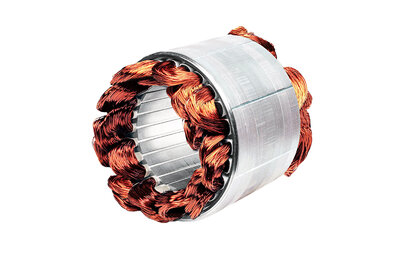
Needle-winding technology is a precise winding process used to manufacture stators with round-wire windings. In this process, a rotating winding needle guides the wire around the individual stator teeth exactly according to the defined winding pattern. The process is particularly well-suited for compact electric motors with high requirements for winding quality and process reliability.
Thanks to optimally coordinated manufacturing processes, needle winding technology enables cost-effective production of a wide variety of stator variants. GROB’s modular system concepts can be flexibly adapted to different motor designs, wire diameters, and production volumes.
Advantages
- Precise round wire winding with high repeatability
- Flexible production of various stator geometries
- High process stability and system availability
- Scalable production solutions from prototype to series production
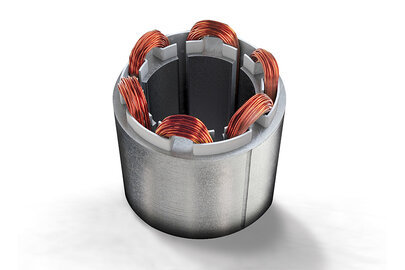
Flyer winding technology is one of the proven methods for manufacturing stators with round-wire windings. As the wire is guided over a rotating flyer, precise windings are created with high process quality and reproducible results.
The technology is suitable for a wide variety of motor designs and can be flexibly integrated into automated production lines. Thanks to the system’s modular design, production capacities can be adapted to new requirements at any time.
Advantages
- Proven technology for precise round-wire windings
- High manufacturing quality and process reliability
- Flexible integration into automated production lines
- Scalable system concepts for different production volumes
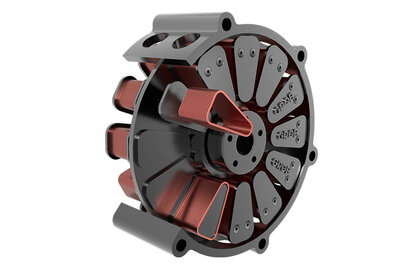
The manufacture of axial flux motors places special demands on winding technology, process precision, and automation. GROB develops production solutions for various manufacturing concepts and supports companies from process development through to industrial mass production.
Depending on product requirements, two different winding methods are used. In linear winding, the individual stator teeth are precisely wound orthocyclically with round wire. Alternatively, the use of rectangular wire enables the continuous production of complex free-form coils, which are processed in subsequent steps into high-performance stators for axial flux motors.
Thanks to the flexible equipment technology, different motor designs, coil geometries, and production requirements can be implemented cost-effectively.
Advantages
- Production of various coil geometries and coil heights
- Precise orthocyclic round wire winding
- Processing of rectangular wire with compensation for trapezoidal thickening
- Flexible production solutions for various axial flux motor designs
Stator Impregnation
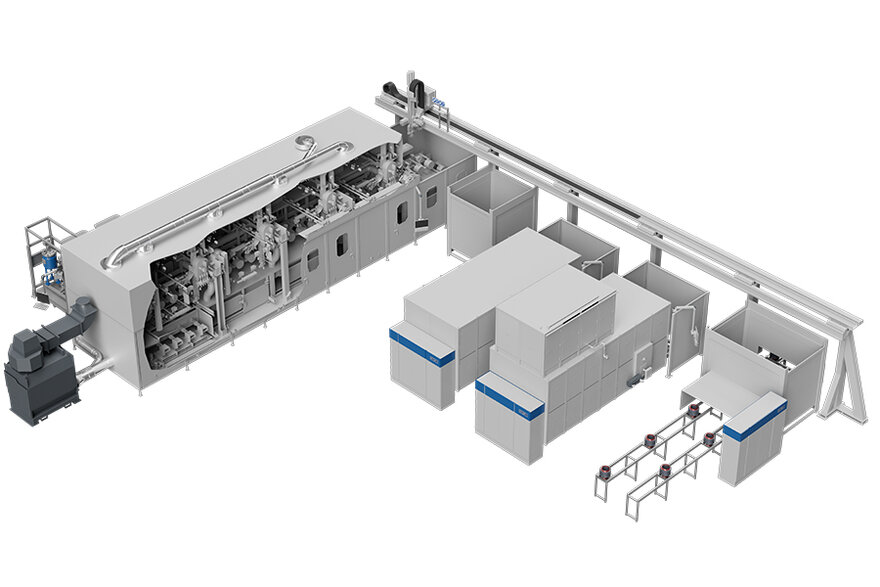
Impregnation is a critical step in stator manufacturing. Applying and curing special resin systems permanently secures the windings while also improving heat dissipation.
GROB production systems enable reproducible resin application as well as a cost-effective gelation and curing process. Thanks to innovative clamping concepts, workpieces with different geometries can be processed without the need for changeovers.
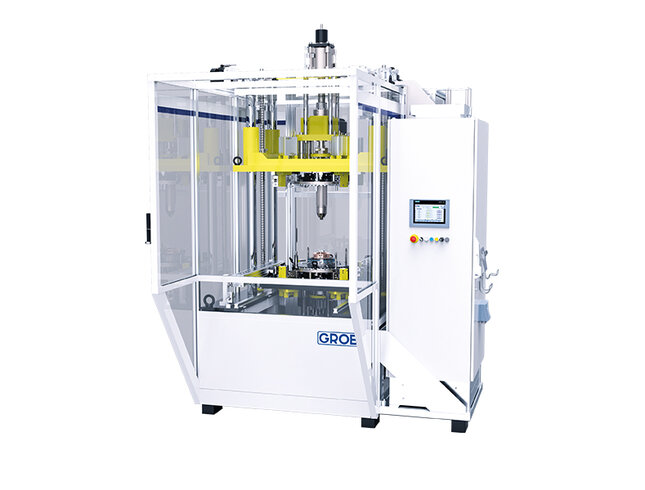
Machine Features:
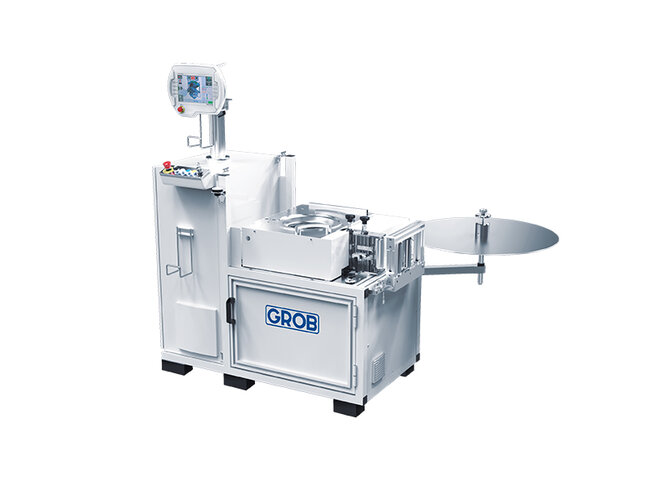
- Easy to use
- Programmable length of the slot insulation paper
- Full control over height, width, and collar height
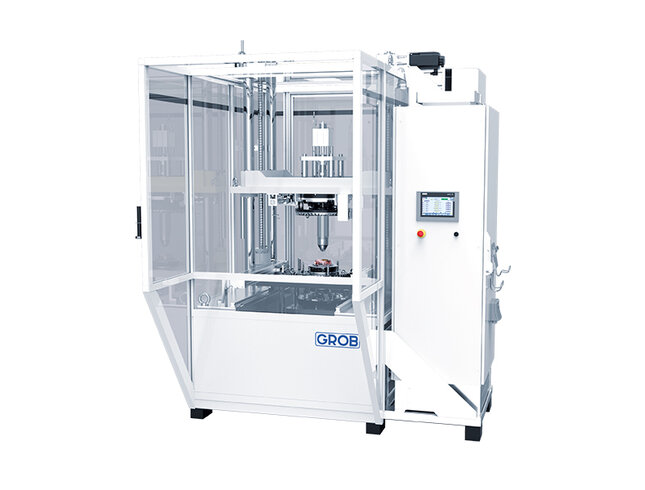
Machine Features:
- Easy to operate
- Fully electric operation
- Collar support to protect the slot insulation paper and the wire
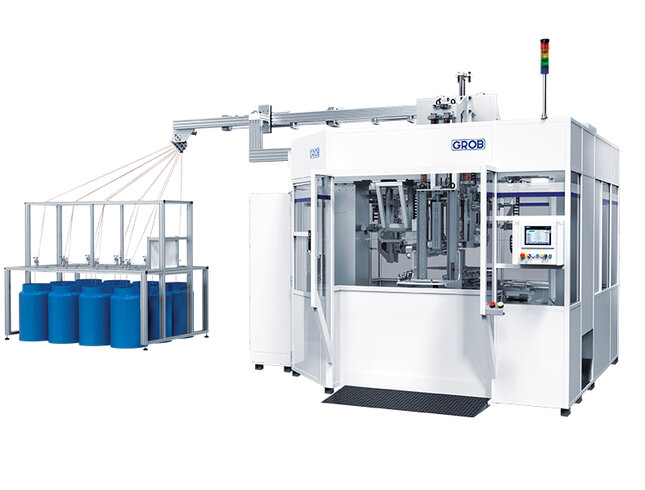
Machine Features:
- Easy to operate
- Fully electric operation
- Fully programmable cutting parameters
- Collar support to protect the slot insulation paper and the wire
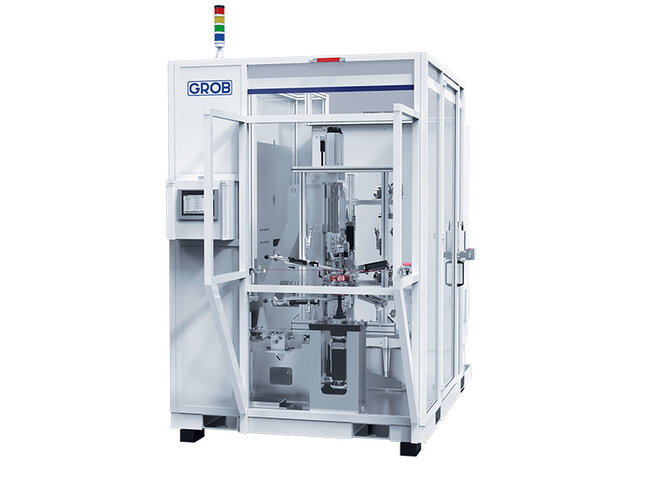
Machine Features:
- Highly efficient coil feeding with three independent carriages
- Automatic adjustment to different heights of laminated cores
- Collar support to protect the slot insulation paper
- Automatic opening and centering of dies
- Anti-Twist System (optional)
- Lead Twist (optional)
- HMI-controlled tool change
Machine Features:
- Easy to operate
- Fully electric operation
- Simultaneous lacing of the upper and lower winding heads
- Different bandaging patterns possible for the upper and lower winding heads
- Automatic knotting
- Cutting the lacing cord using a blade or heat
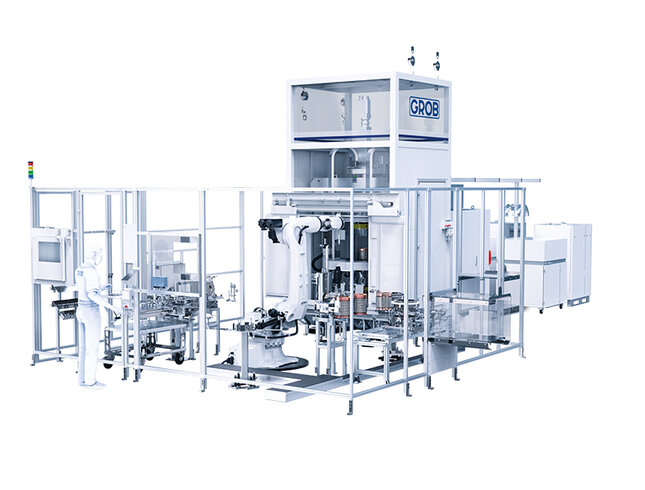
Machine Features:
- Programmable bevel angle
- Plasma/TIG/laser welding
- Fully electric motion
- Programmable clamping force
Machines for Stator Winding of Alternating Current Generators (template-based wave winding)
Machines for Stator Windings (Linear Winding)
Impregnation Lines
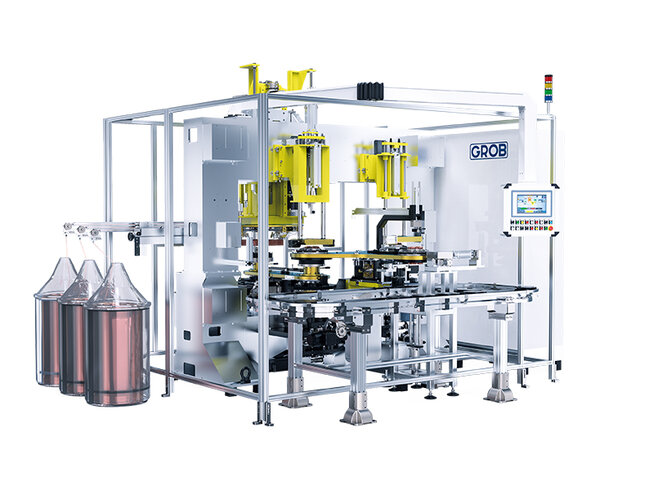
Machine Specifications:
High slot fill factor for highly efficient alternating current generators
Winding, feeding, and intermediate forming—all in a single system
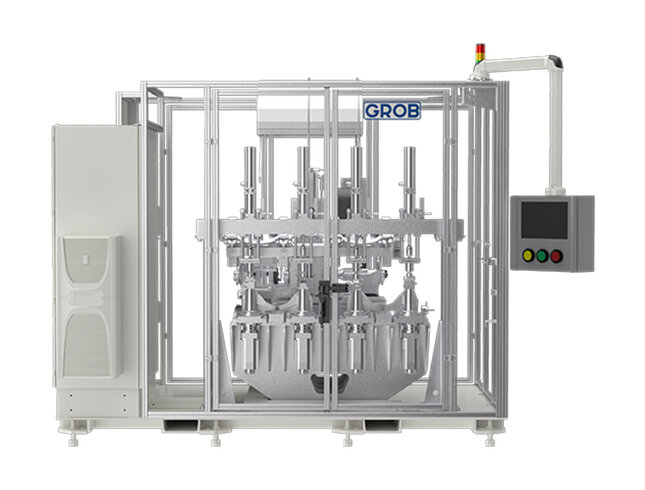
Machine Characteristics:
- Winding of axial-flow segments or segmented stators
- High-precision orthocyclic winding at high winding speeds
- 1 to 4 spindles operating simultaneously
- Wide range of wire diameters
- High-performance wire clamping unit
- Fully and easily programmable
- Quick tool change
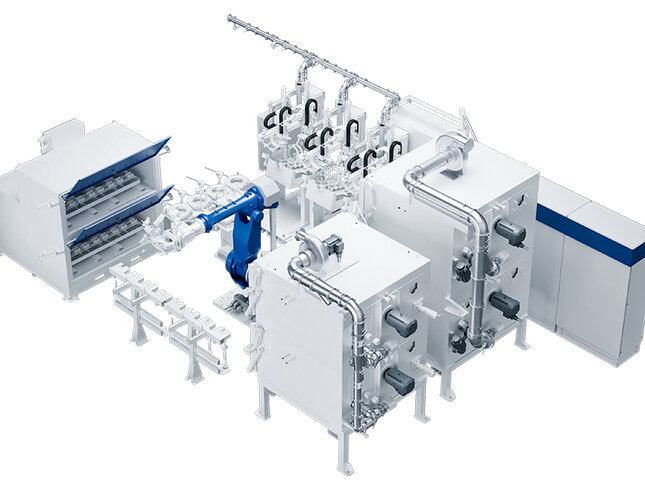
Machine Features:
- High flexibility and scalability
- A wide range of product dimensions can be processed using the same equipment
- Quick tool change
- Fully automated solution
Production Solutions for a Wide Range of Applications
The requirements for stators vary considerably depending on the application.
GROB develops production solutions for a wide variety of motor designs and supports companies in the cost-effective manufacture of electric drive systems for:



GROB’s partnership with eAx solutions, a Bosch subsidiary based in Berlin and a development service provider focused, among other things, on the development and industrialization of electric axle solutions, demonstrates that GROB successfully collaborates with more than just OEMs in the field of electric mobility.
Would you like to receive more information?
Download the brochure to learn more about our technologies, process expertise, and plant concepts across the entire value chain.
FAQ - Frequently Asked Questions About Stator Manufacturing with GROB
GROB develops production systems for hairpin technology, continuous hairpin technology, winding technology, and stator impregnation. The systems are customized to the specific product, production volume, and degree of automation.
In hairpin technology, individual flat copper wires are bent into U-shaped hairpins and inserted into the laminated stator core. Continuous hairpin technology processes continuous flat copper wires into winding mats, resulting in fewer contact points and reducing the wiring effort.
The impregnation permanently secures the windings in the stator and improves heat dissipation. This increases the mechanical stability, electrical insulation, and service life of the electric motor.
Yes. GROB supports companies from the feasibility study through process development and prototype manufacturing all the way to a turnkey mass production line.
The production facilities support the manufacture of stators for electric vehicles, light e-mobility, industrial drives, building automation, alternating current generators, and applications in drones and humanoid robots.
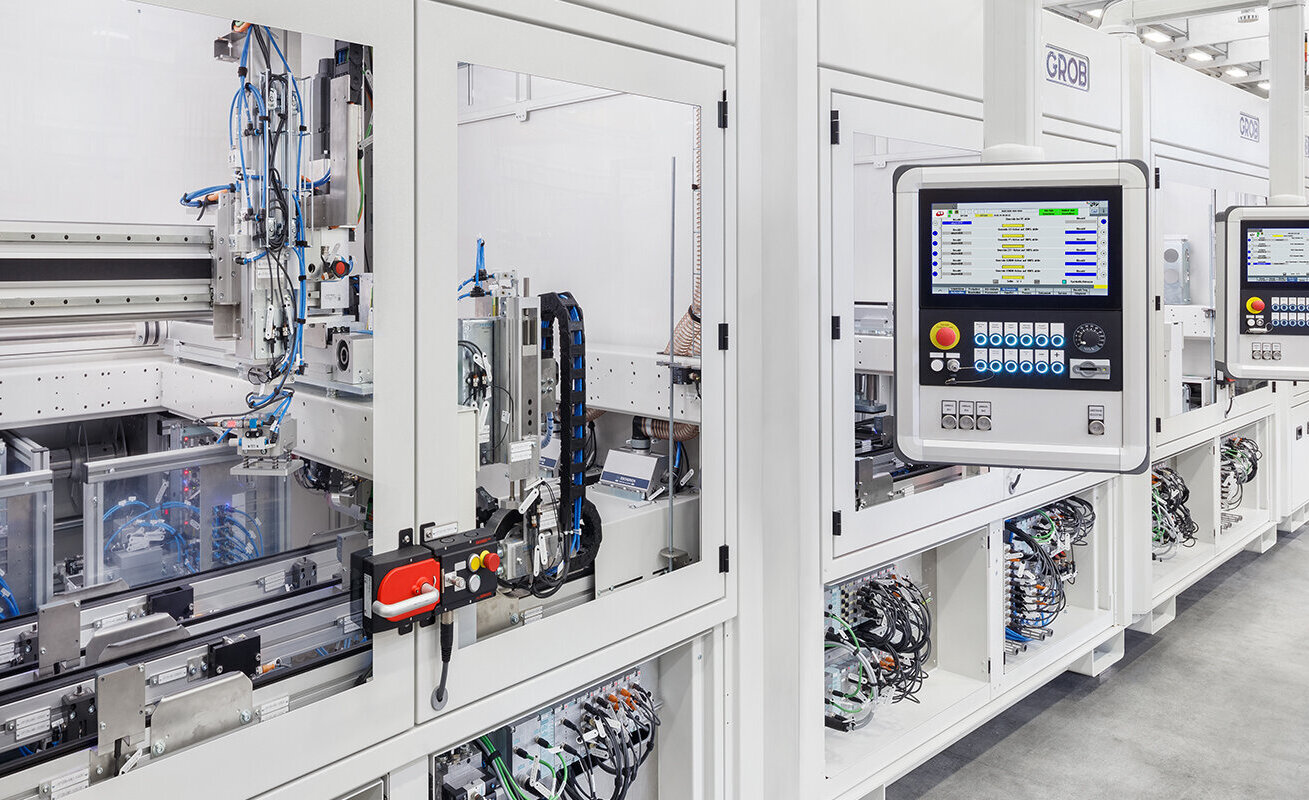
This results in flexible and scalable production concepts for a wide variety of applications and production volumes.