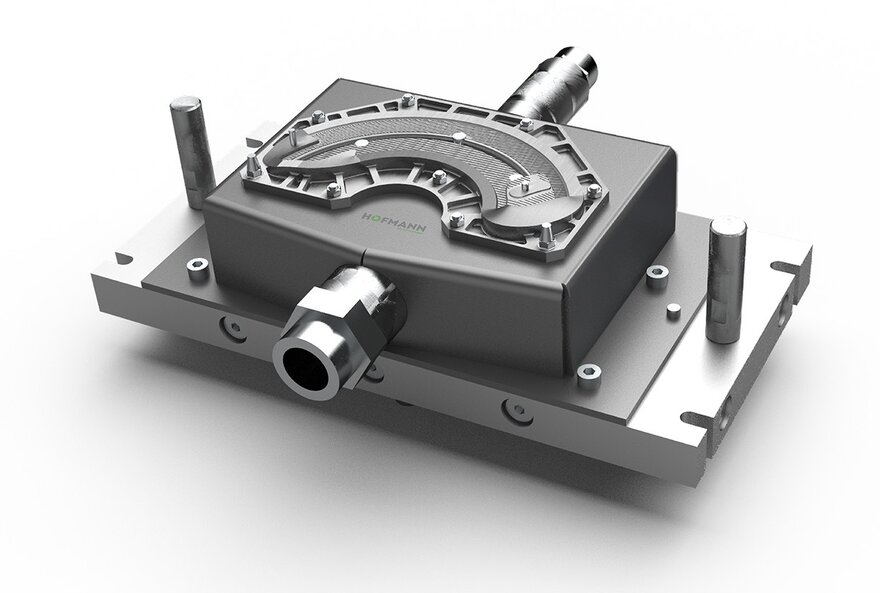
GROB-WERKE GmbH & Co. KG, in collaboration with Siegfried Hofmann GmbH, is revolutionizing the manufacturing of particle foam tools: Thanks to the innovative GROB Metal Printing (GMP) process, aluminum foam tools can be produced in just a few days.

A powder-free additive manufacturing process for aluminum components
GMP300
Safe, Fast, and Cost-Effective Manufacturing of Aluminum Components with Near-Final Contours
For Maximum Manufacturing Flexibility and Industrial Mass Production
The GROB GMP300 enables the safe and rapid production of aluminum components with near-net-shape contours thanks to its powder-free manufacturing process.
With the GMP300, we offer our customers reliable, efficient, and cost-effective equipment that provides maximum manufacturing flexibility. Working closely with you, we develop parts optimized for additive manufacturing, thereby unlocking the full potential for your production.
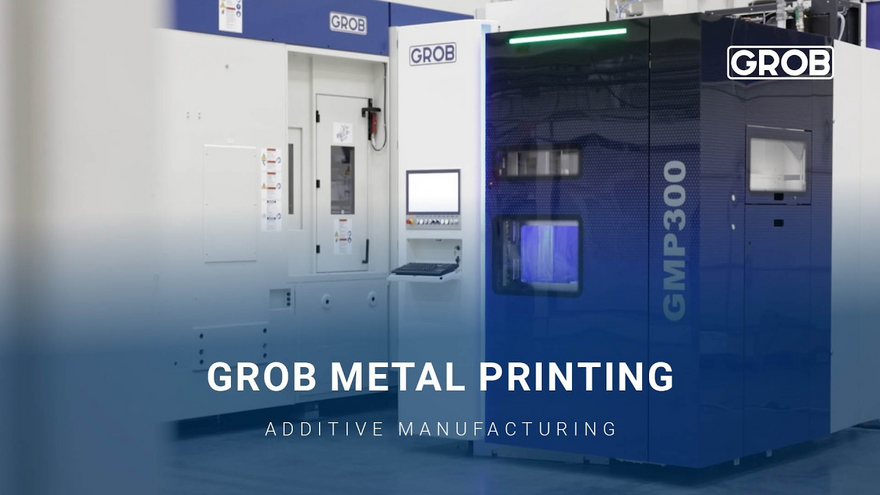
An Overview of the Technology
An Overview of the Technology
01
02
03
04
05
Technical Specifications
-
Maximum construction volume[mm3]300x300x300
-
Positioning accuracy[mm]0.015
-
Var. min. / max. drop diameter[mm]0.3 – 0.85
-
Max. calculated build-up rate199 cm³/h (250 Hz at a droplet diameter of 750 μm)
-
Building panel heating max.650 °C
-
Control systemBECKHOFF TwinCat
-
Power input[kWh]4 operating companies, max. 12
-
System size[mm]2,300 x 2,700 x 2,700
-
Max. axis speed[m/min]30
-
Shielding gasNitrogen
{f:if(condition:\'center==left\', then:\'false\',else:\'true\')}'}
Benefits at a Glance
-
High flexibility
Quick panel changes, flexible material changes, and minimal cleaning required
-
High level of security
No laser, no light source, no powder, and no machine enclosure required
-
Component geometry
Lightweight structures and cooling channels can also be implemented in completely enclosed bodies
-
High efficiency
High build rates with good accuracy (±0.2 mm), high material utilization
-
Aluminum wire as a raw material
Easy handling, easy storage, fewer process steps
-
Excellent material
propertiesMany aluminum alloys are printable
-
Low purchase
costsNo additional costs for peripherals and software
-
Low component costs
Wire as the raw material, nitrogen instead of argon, and low energy consumption
Areas of Application
The GROB GMP300 opens up new possibilities in additive manufacturing for the cost-effective and flexible production of complex metal components. Thanks to its high precision, process stability, and wide range of materials, the system is ideally suited for a wide variety of industrial applications.
Typical applications include:
- Housing components
- Tools
- Grippers and holders
- Heat sinks and fluid components
- Electrically conductive components
- Prototypes and spare parts
- Fixtures and fasteners
Examples of Manufacturing
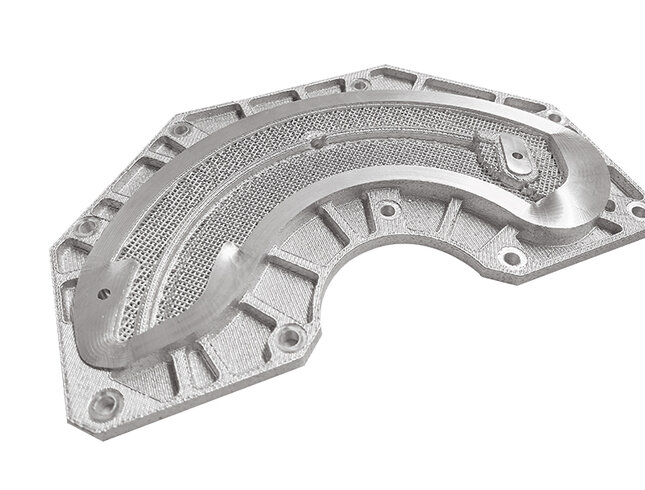
Particle Foam Mold
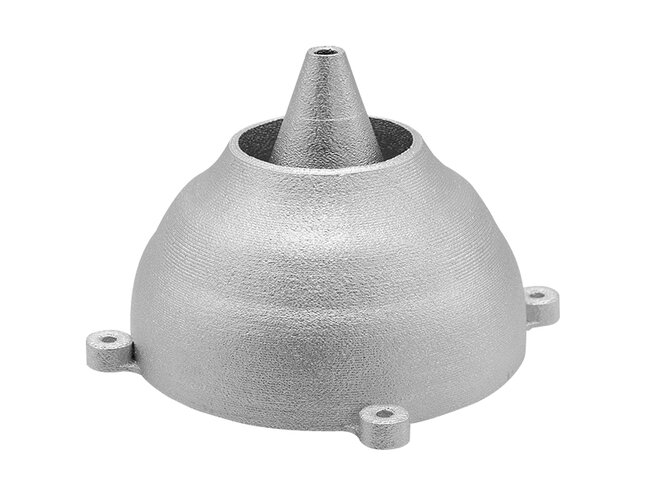
Prototype
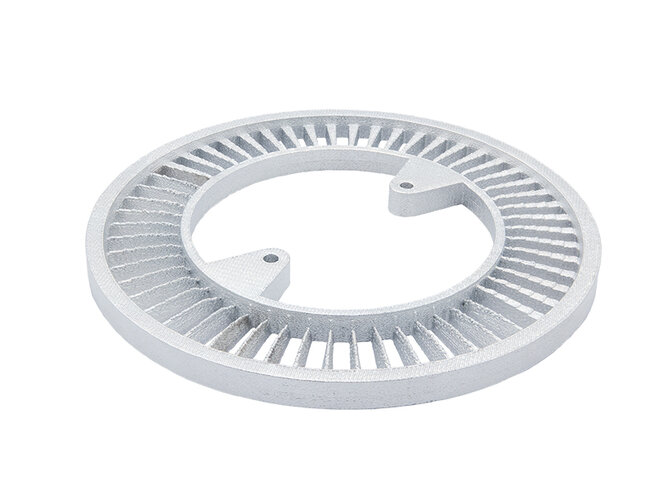
Production Tools
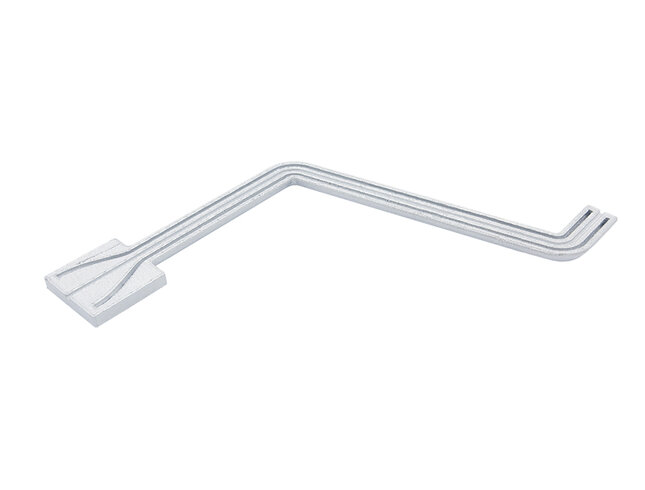
Fluid component
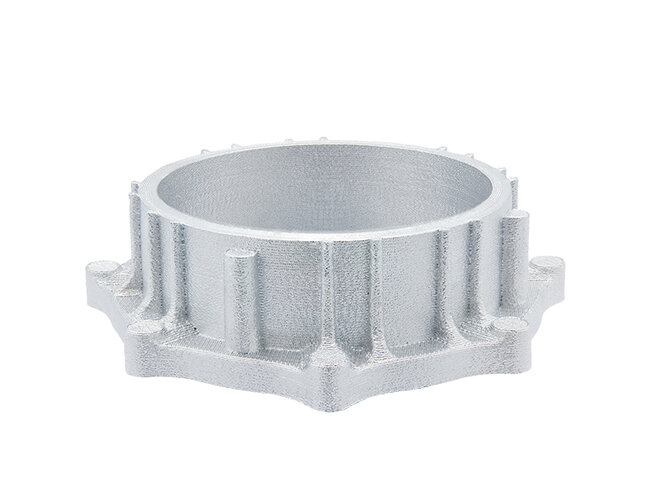
spare part
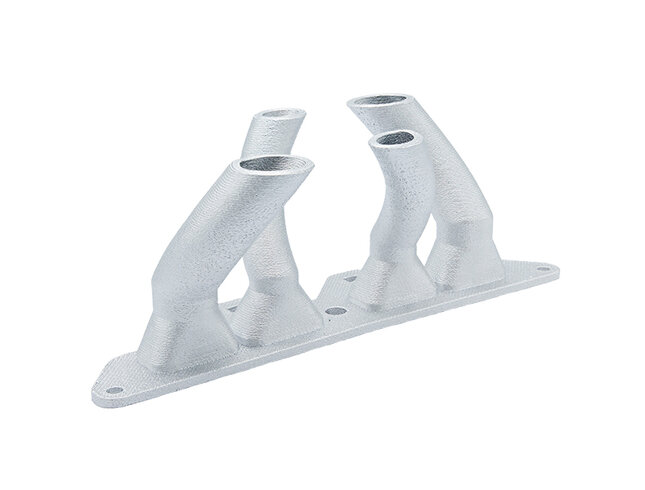
Prototype
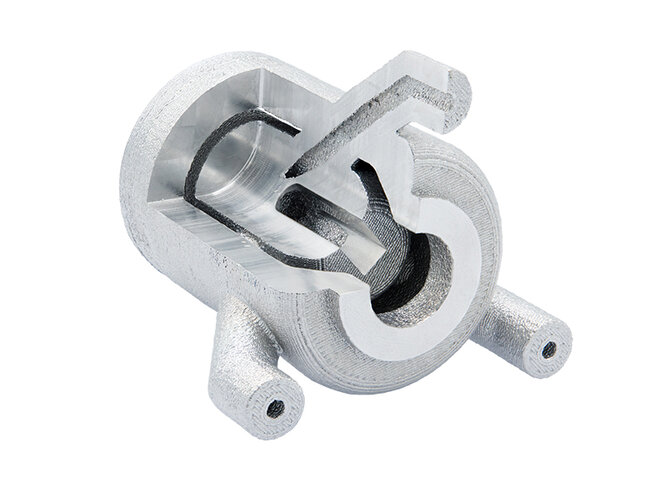
Fluid component
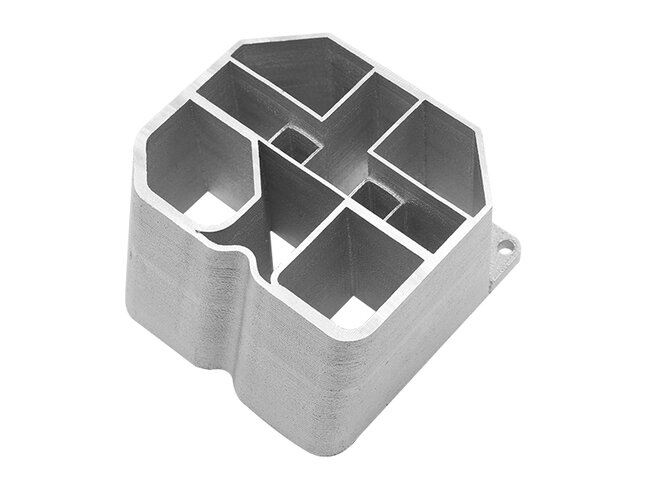
Thin-walled housing component
Automation & Integration
The GMP300 integrates seamlessly into existing manufacturing environments and offers maximum flexibility in data processing. 3D models from common CAD software solutions can be easily imported and further processed. GROB’s proprietary slicer software, which is included with the machine, enables efficient and user-friendly preparation of parts. This creates a seamless digital workflow from design through production.
References & Real-World Examples
The Next Generation of Particle Foam Tools
Downloads
Would you like to receive more information?
Download the complete brochure now, featuring all technical specifications, options, and configuration possibilities.
FAQ - Frequently Asked Questions About the GROB GMP300
The LMP process is an additive manufacturing process in which aluminum wire is melted. In this process, individual metal droplets are precisely placed to build up the component layer by layer, closely following its final contours. This takes place in an inert atmosphere to ensure the highest material quality and protection against oxidation.
The GMP300 processes various aluminum alloys. A key advantage is that it can also process alloys that are considered unsuitable for other additive manufacturing (AM) processes.
It eliminates the need for all machine and tool setup, as well as time-consuming NC programming. In addition, GMP300 enables the design of features such as internal channels that would be technically impossible to achieve through conventional machining.
No. Thanks to the wire feed and the elimination of powder handling, the machine does not require any special peripheral equipment, exhaust systems, or enclosures.
Since the GMP300 manufactures parts with near-net-shape geometries using the Molten Metal Jetting (MMJ) process, the surface is typically slightly rougher than with the LPBF process, comparable to castings. Functional surfaces can be post-processed as usual.
Unlike LPBF systems, the GMP300 uses aluminum wire as its feedstock. This eliminates the risk of explosions caused by fine dust, the need for extensive respiratory protection measures, and the costly installation of peripheral equipment for powder processing.
The GMP300 is cost-effective even for batch sizes as small as 1, since there are no tooling costs and the build plate does not need to be fully occupied to print efficiently. It thus bridges the gap between expensive prototyping and mass production.
The installation space measures 300 x 300 x 300 mm³, and only the area required for the part is heated at any given time. Process parameters such as droplet size can be adjusted as needed. This enables an improvement in surface quality, an accuracy of ±0.2 mm, and rapid component production. The integrated sensors for monitoring droplet and component height ensure consistent quality throughout the entire printing process.
Yes. Since the GMP300 is based on GROB-WERKE’s proven mechanical engineering expertise, it is designed for industrial use. The automatic removal of components from special substrate plates enables a high degree of automation without the need for manual sawing. Since the system poses no hazards, it can be installed in a standard production facility. We are happy to develop customized automation concepts upon request.
The GMP300 is relatively undemanding. In addition to approximately 4 kW of power during operation and compressed air, it requires only nitrogen 5.0 as a shielding gas and the appropriate aluminum wire (e.g., welding wire) as a consumable. No special enclosure is required, as is the case with powder systems.
You Might Also Be Interested In
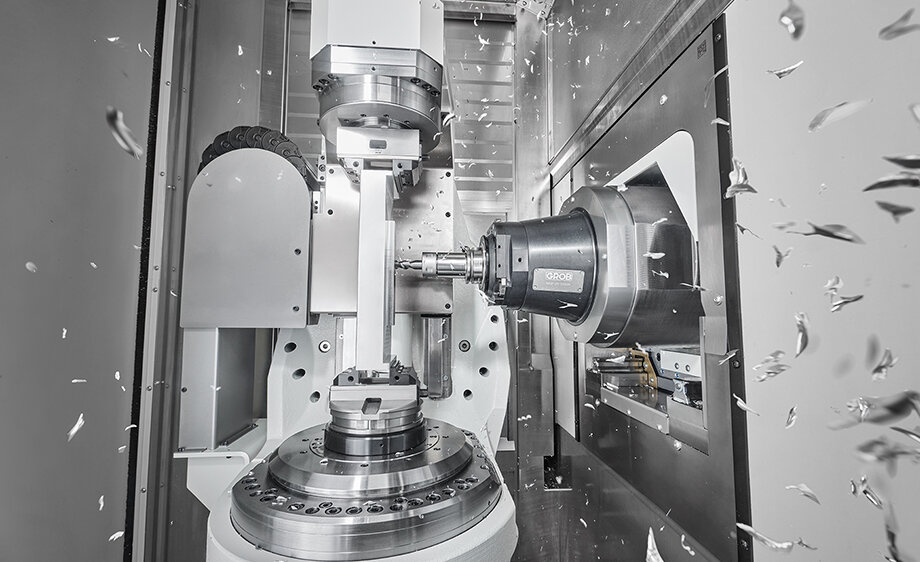
A machine design to meet all the demands of modern conventional machining
4- and 5-axis machining centers for maximum productivity, precision, and flexibility in your manufacturing operations.
Discover Universal Machines Now
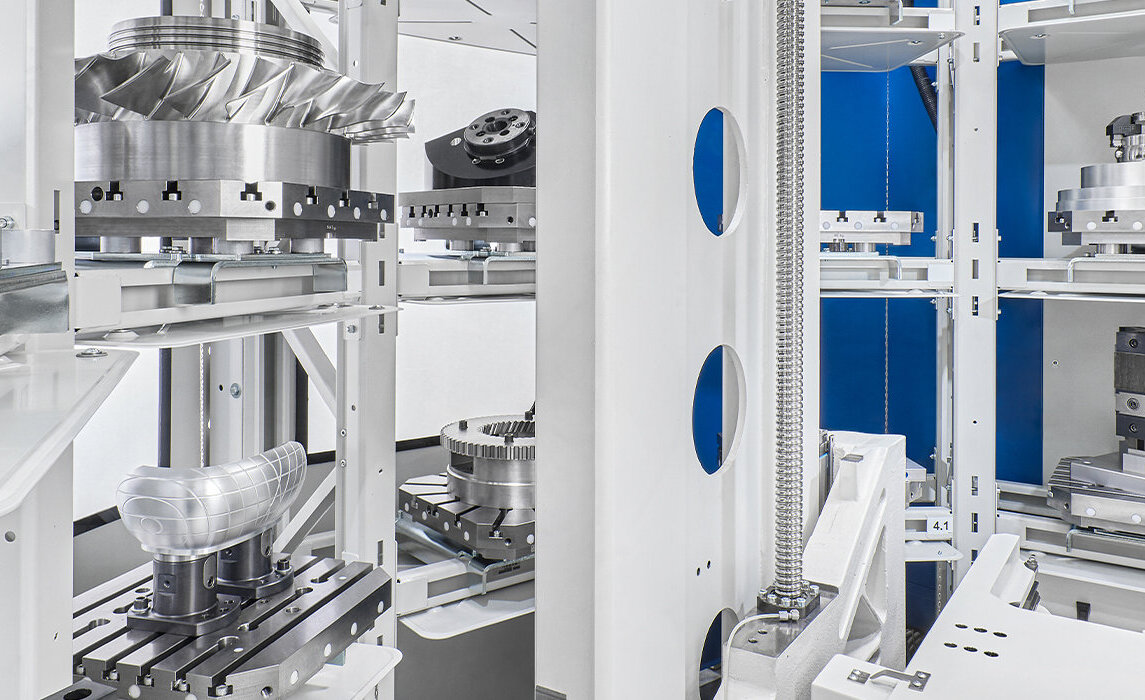
From a single machine to a fully networked production system
The modular design and the combination of standard automation and custom components result in solutions tailored for both individual orders and small- to medium-sized batch sizes. Features such as setup during production, intelligent order planning, and centralized control software ensure that machine uptime is maximized and idle states are minimized.
Discover Products Now
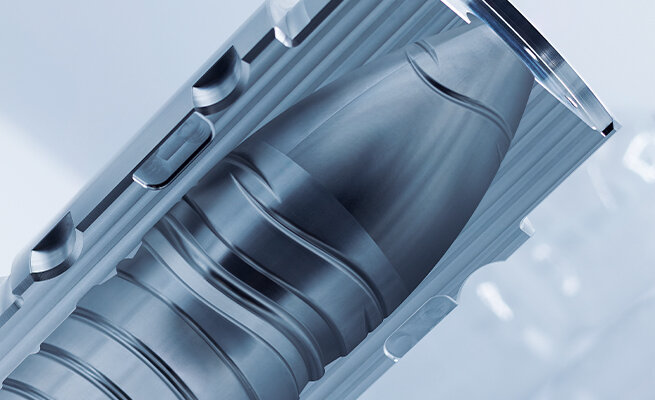
The right solution for every industry
Customized Production Solutions for Industry: Precision That Sets the Standard.
From the mold industry to medical technology and the automotive industry, and on to semiconductors and aerospace—we transform complex manufacturing requirements into highly efficient production processes.
Discover Industry Solutions Now
From the mold industry to medical technology and the automotive industry, and on to semiconductors and aerospace—we transform complex manufacturing requirements into highly efficient production processes.
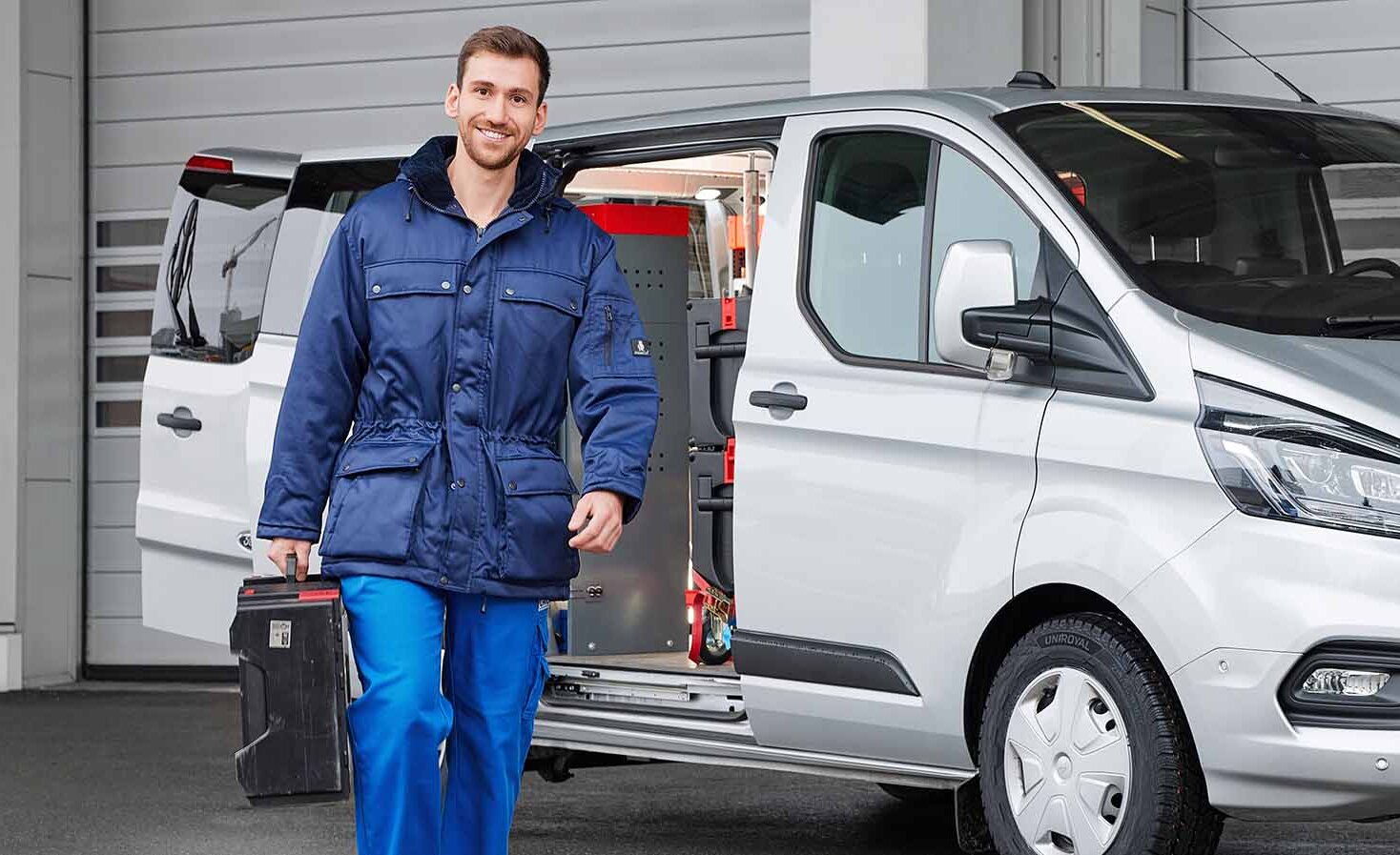
Global service, whenever you need it
Do you need on-site support? Then let us help you! Whether you need assistance with production, service work, or retrofitting, GROB Service is happy to assist you.
Discover Now
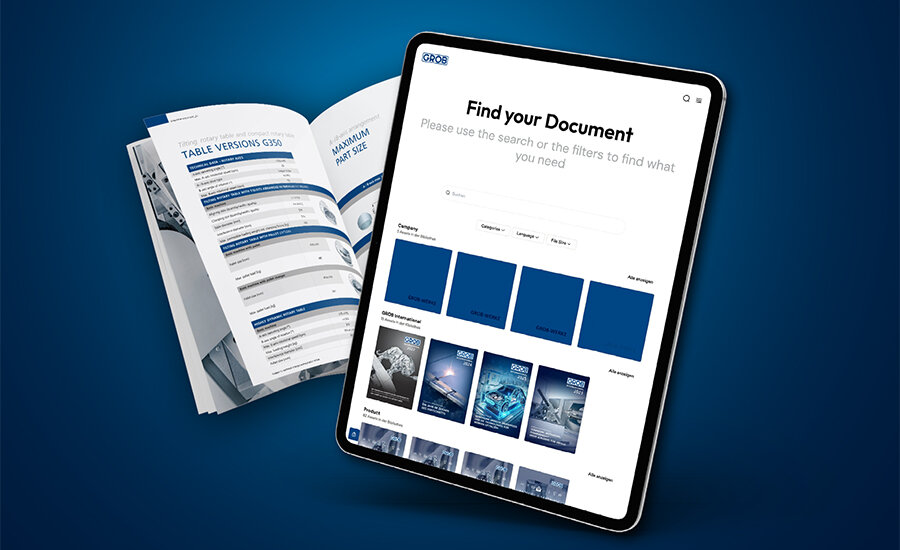
Brochures, certificates, and more
Sign up now to learn everything you need to know about GROB-WERKE.
Go to the GROB Media Center