Production Systems for the Industrial Manufacture of Fuel Cells
Fuel cells are among the key technologies for the future of the mobility and energy sectors. Economically viable mass production requires high-precision, flexible, and scalable manufacturing systems that can reliably support increasing production volumes and technological advancements.
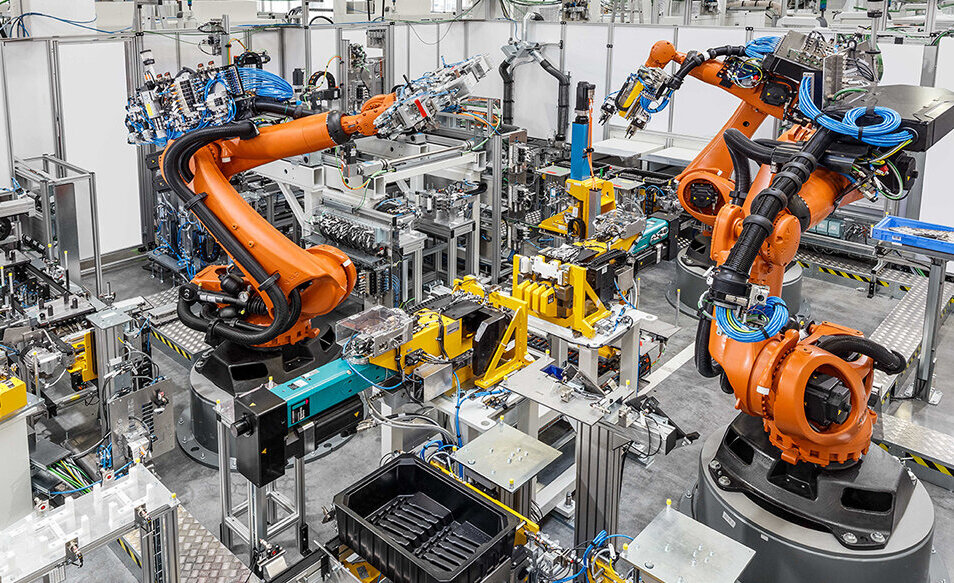
Our system solutions enable the automated assembly of fuel cell components and fuel cell stacks for applications in mobility, commercial vehicle technology, and other hydrogen-based energy systems.
From initial concept development to turnkey production lines, we support our customers throughout the entire industrialization process.
Production Solutions for Fuel-
Cell Stacks
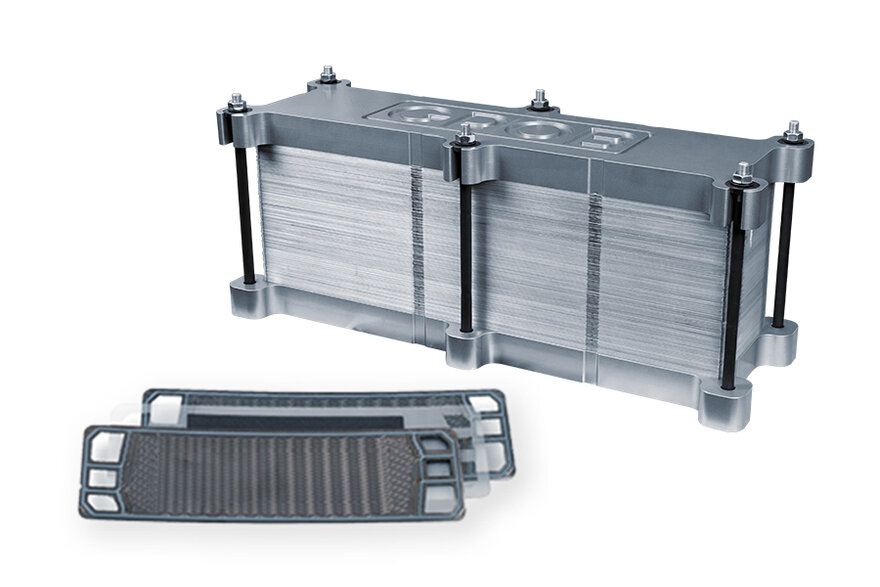
The fuel cell stack is at the heart of every fuel cell system. It consists of a large number of precisely assembled individual components that place the highest demands on manufacturing precision and process reliability.
Our production lines are designed for the automated assembly of fuel cell stacks and enable efficient manufacturing for a variety of power output ranges and applications.
By strategically decoupling individual process steps, we create production systems that offer high flexibility, optimal capacity utilization, and maximum productivity.
Your Benefits at a Glance!
-
Precise stack assembly
High-Precision Assembly for High-Performance Fuel Cell Stacks
-
High-speed stacking
Efficient stacking processes for high productivity
-
Scalable production concepts
Flexible systems for ramping up production to mass production
-
Turnkey solutions from a single source
From engineering to turnkey production lines
Would you like to receive more information?
Download the brochure to learn more about our technologies, process expertise, and plant concepts across the entire value chain.
FAQ - Frequently Asked Questions About GROB's Fuel Cell Assembly
A fuel cell stack consists of several fuel cells arranged one on top of the other, which together generate electrical energy. It forms the central power unit of a fuel cell system.
Automated manufacturing processes enable high precision, consistent quality, and cost-effective mass production. At the same time, they increase process stability and reduce the number of manual steps.
High-speed stacking refers to the highly precise and automated stacking of individual fuel cell components. The process enables short cycle times while maintaining high positioning accuracy.
GROB develops customized production concepts and implements scalable production lines for industrial fuel cell manufacturing—from planning and automation to commissioning.
Yes. GROB's system designs include interfaces for the future integration of additional manufacturing processes, such as those for bipolar plates (BPP) or membrane electrode assemblies (MEA).