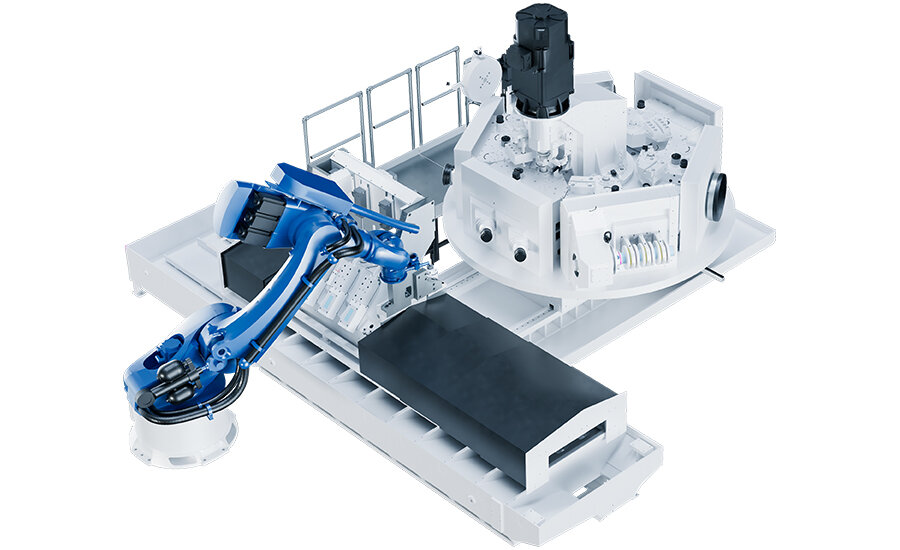
Complete machining of large-format components
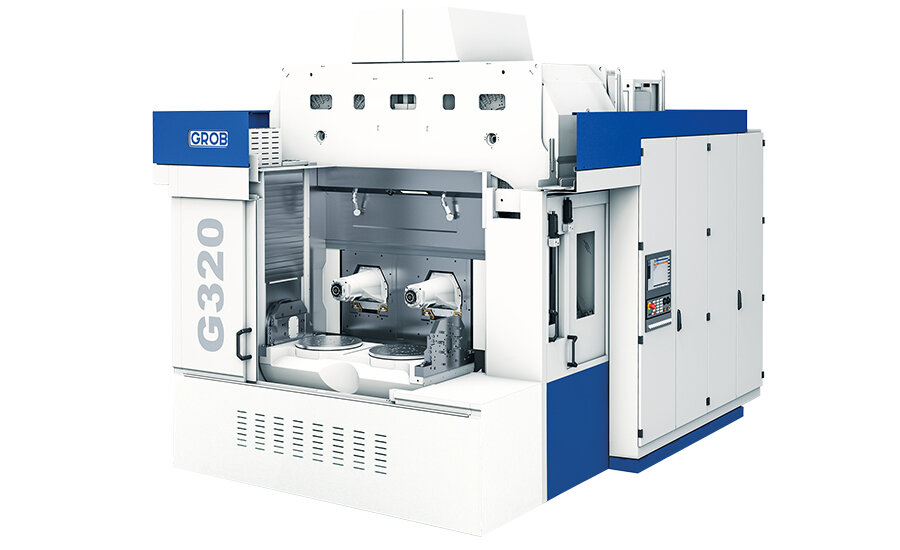
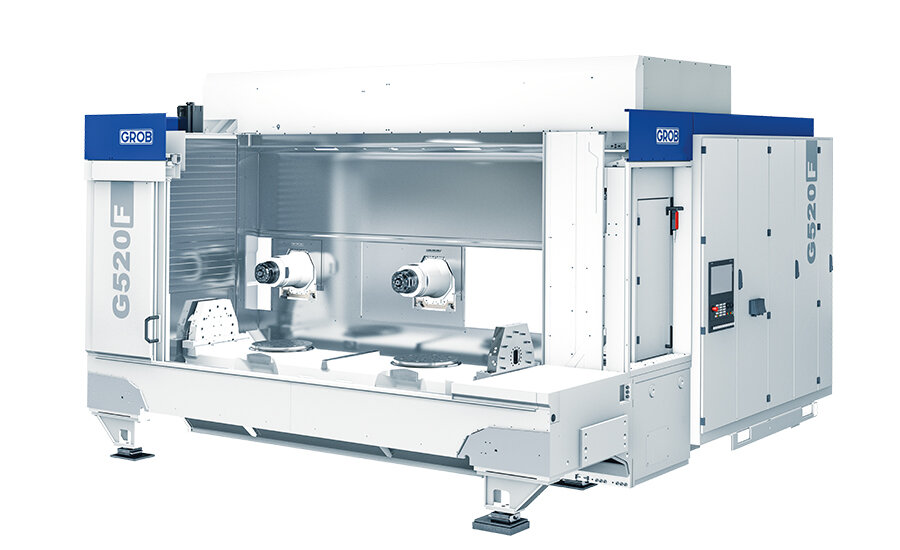
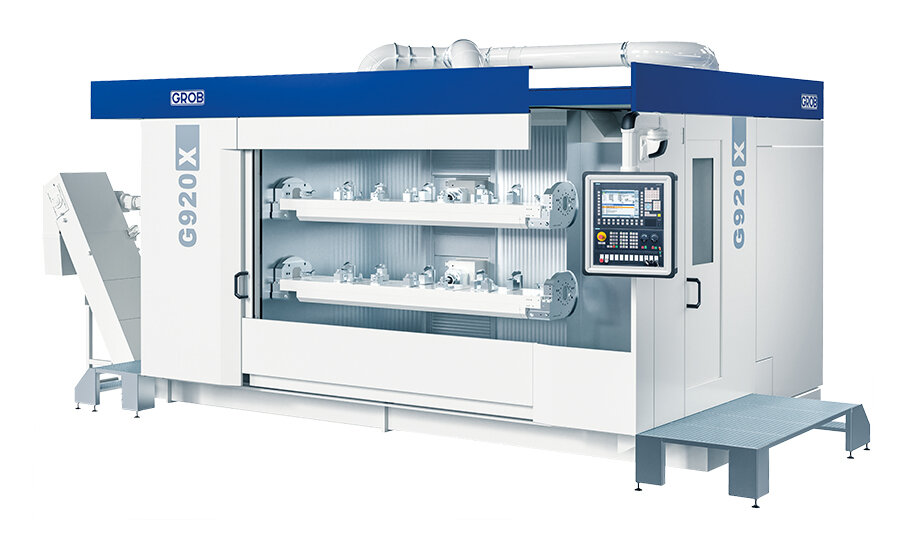
The F-Series 4/5 was developed specifically to meet the requirements of modern vehicle platforms. Whether for mega-castings, battery housings, underbodies, or large-format structural components—these machining centers enable high-precision and cost-effective tasks with maximum process stability.
Thanks to its modular machine platform, flexible spindle configurations, and intelligent automation concepts, the F-Series 4/5 is ideally suited for highly automated production lines.
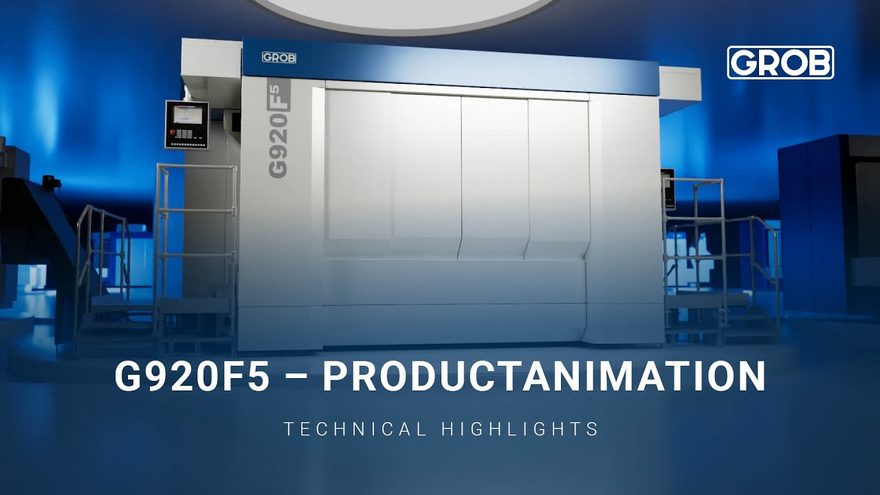
Technical Highlights
Modular Machine Design
The modular machine design allows for flexible configuration as a single- or two-spindle machining center, as well as for 4- or 5-axis machining.Unique Axis Concept
The X, Y, and Z linear axes move the machining spindle with maximum dynamics and rigidity. In addition, the optimally coordinated axis configurations ensure maximum precision and process stability.High Dynamics and Short Chip-to-Chip Times
Optimally coordinated axis drives enable fast motion sequences and high productivity while maintaining stable machining processes.Free Chip Flow and Efficient Heat Dissipation
Steep machine bed slants and the horizontal spindle arrangement ensure controlled chip removal and reduce heat input into the part and fixture.High machining accuracy
The rigid machine structure ensures consistently reproducible machining results, even with complex part geometries.
Technical Specifications
Both machines are available with either one or two spindles.
-
Travel distances in
X-/Y-/Z-/W-axis[mm]2,900/1,800/630/
750 -
Maximum speeds in
X/Y/Z/W axes[m/min]90/75/120/60 -
Maximum acceleration in
X/Y/Z/W axes[m/s2]7/12.5/16/
4.5 -
Tool InterfaceHSK-A63
-
Maximum rotational speed nmax[min-1]12,000–18,000
-
chip-to-chip time[s]3.6
-
Table Loading[kg]2,750
-
Max. workpiece size[mm]Ø 2,000/L 2,900
-
Travel distances along the X-, Y-, Z-, and W-axes[mm]2,950/2,050/900/
750 -
Maximum speeds on the X-axis, Y-axis, Z-axis, and W-axis[m/min]80/60/100/60
-
Maximum acceleration on the X-axis, Y-axis, Z-axis, and W-axis[m/s2]7/8.5/11.0/
4.5 -
Tool InterfaceHSK-A63
-
Maximum rotational speed nmax[min-1]18,000
-
chip-to-chip time[s]4.3
-
Table Loading[kg]2,750
-
Max. workpiece size[mm]Ø 2,000/L 2,900
Subject
to
technical modifications. The technical specifications shown reflect the standard configuration.
For additional options, spindle variants, automation solutions, and custom configuration options, please refer to the product brochure.
Benefits of the F4/5 Series at a Glance
-
Flexible Number of Spindles
Choice between one or two spindles
-
Flexible automation options
with gantry, robots, or automation system
-
High Axial Dynamics & Stiffness
for precise machining results
-
Flexible task for processing various component geometries
through an intelligent clamping design
-
Short
chip-to-chip time
For high-volume production and reduced cycle times
-
High process reliability
thanks to a robust machine and temperature design
-
Optimized
Temperature
conceptfor consistent manufacturing quality in mass production
-
Modular Machine
Platform4- and 5-Axis Task
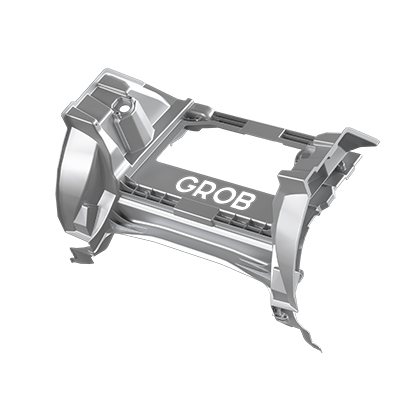
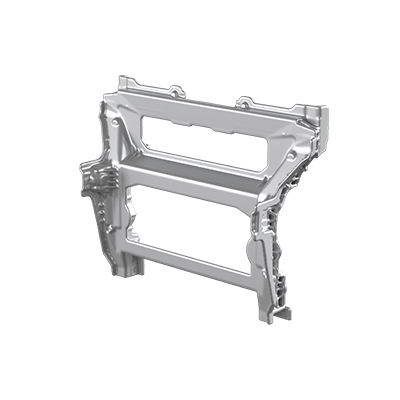
The F-Series 4/5 machines enable precise 4- and 5-axis machining of large-format aluminum structural components during clamping. These machining centers were specifically developed for modern vehicle architectures and large-volume mega-castings.


Automation & Custom Machine Building
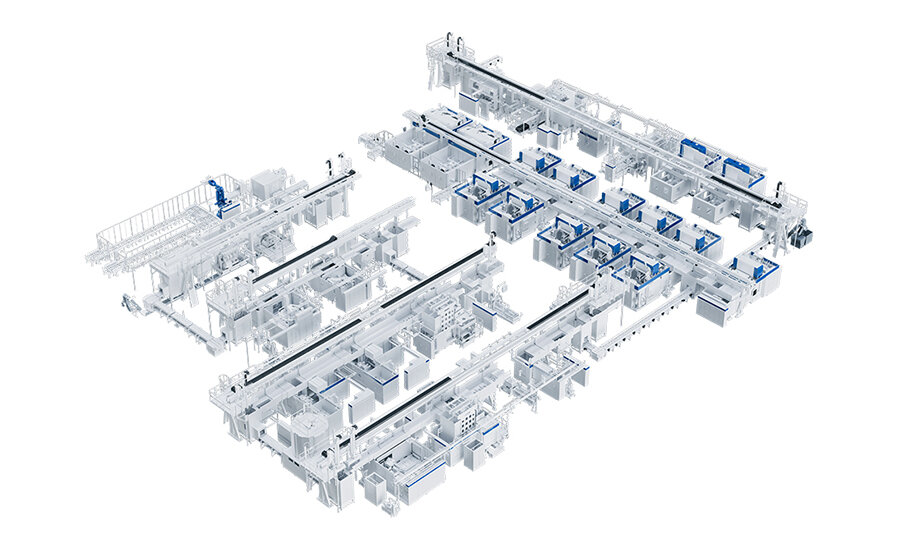
The F4/5 series is designed entirely for use in highly automated production lines. The machining centers can be flexibly integrated into a variety of manufacturing concepts—from compact cells to turnkey lines.
Typical automation solutions:
- Robot-based handling of parts
- Gantry and portal systems
- Interlinked production lines with conveyors
- Flexible I- and H-loader systems
Thanks to this modularity, the machines are suitable for both new installations and expansions of existing production systems.
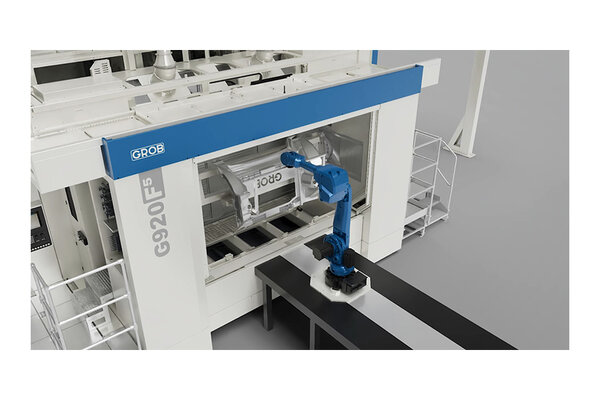
Robot-assisted automation enables precise and rapid loading of the machine—tailored to the specific production requirements.
- Loading from the front or from above
- Direct loading into the work area using a double gripper
- Integration of additional processes such as: deburring, washing, marking
- Standardized assemblies for quick installation
- Flexible adaptation to different workpiece sizes
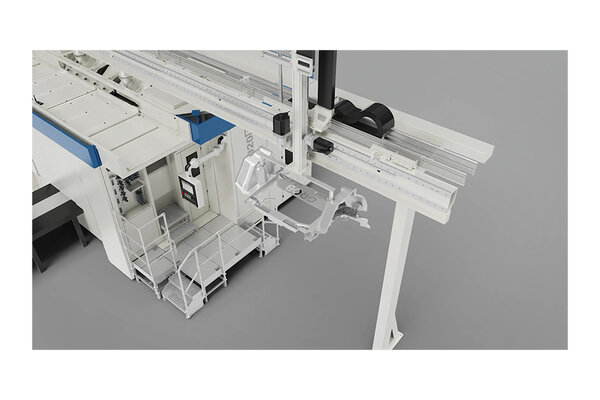
The linear gantry system enables particularly efficient workpiece feeding while maintaining unobstructed access to the machine.
- Simultaneous movement in the horizontal and vertical planes
- High cycle rate thanks to parallel motion sequences
- Unobstructed access to the machine at ground level
- Optionally available with a telescopic solution for low ceiling heights
- High process reliability in automated series production
References & Real-World Examples
Would you like to receive more information?
Download the complete brochure now, featuring all technical specifications, options, and configuration possibilities.
FAQ - Frequently Asked Questions About the GROB F4/5 Series
The machines are designed for large-format aluminum structural components, including battery housings, mega-castings, underbodies, and chassis and body components.
The G900F4/G920F4 is designed for high-productivity 4-axis tasks, while the G900F5/G920F5 also enables full-fledged 5-axis machining of complex workpiece geometries.
Mega-castings reduce the number of individual components and simplify assembly processes. This results in lower weight, lower production costs, and reduced manufacturing effort.
The machines are optimized specifically for aluminum alloys, such as those used in modern automotive manufacturing and e-mobility applications.
Thanks to a thermally stable machine design, rigid axis systems, optimized axis drives, and a machine structure engineered for aluminum machining.
Yes. The machining centers were specifically designed for use in highly automated automotive production environments with short cycle times and high machine availability. GROB’s machining centers for mega castings are designed for robotic automation, gantry systems, direct loading, automation systems for interlinked production lines, and the integration of additional processes such as deburring or washing.